A snowboard bag might be a simple cover for a short drive or a more substantial luggage item for a longer trip. The biggest model is therefore not automatically the most useful. Establish what needs to travel together and which journeys you will make with it. The bag must fit the packed equipment, rather than merely match the length printed on your board.
Define exactly what goes inside
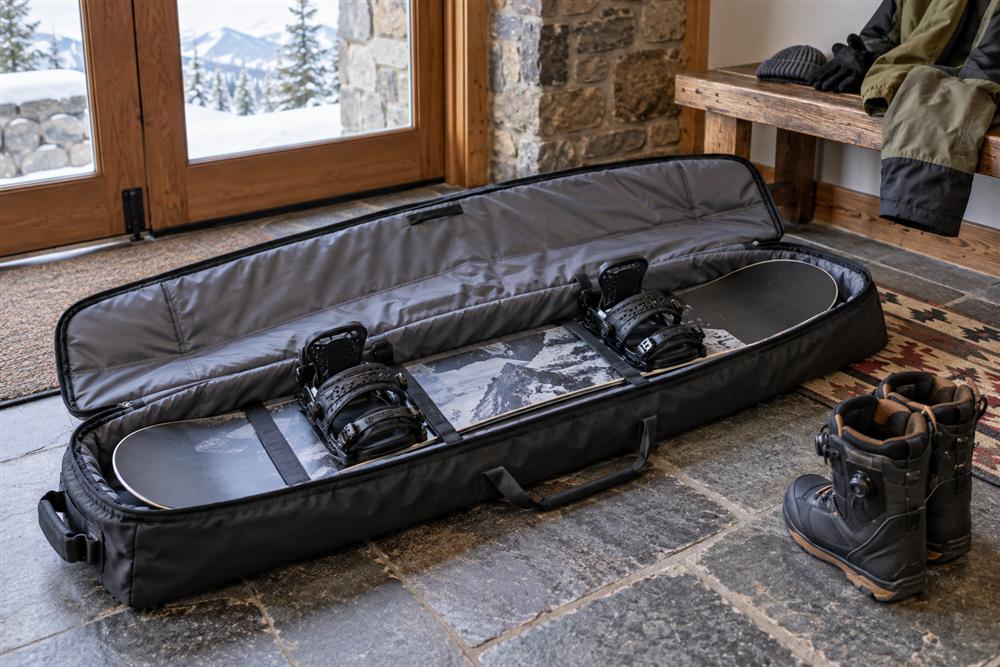
List whether you will carry the board alone, the board with bindings attached or boots and clothing as well. Check the model description for the intended use of its interior. A large main compartment does not mean every additional item can be stored sensibly inside it.
Compare your board’s measurements with the bag’s stated internal dimensions. With attached bindings, the height and shape of the packed equipment also matter. If the manufacturer gives only a nominal length, ask which board sizes and combinations actually fit.
Try packing your own equipment
Bring the board for a fitting if the retailer allows it. Close the zip completely and check that it runs without forcing the contents together. Notice which components touch and how the intended internal restraints are used.
Test additional pockets with the things you intend to put in them. A boot compartment should accommodate your own boots. Check whether damp items can be kept separately and what the care instructions say about cleaning the interior.
Rehearse carrying the packed bag
Lift it using the designated handles and try the shoulder strap. Carrying comfort is difficult to assess with an empty bag. Consider how you would manage other luggage and open a door without constantly repositioning the long item.
Wheels can help on some longer journeys, but they change the weight and packed size. You still need to carry the bag on stairs. Check more than how it rolls across the shop floor: consider accessible lifting points and the total loaded weight.
Compare it with the actual travel requirements
Ask each transport provider about current requirements for your particular luggage. A bag described as a travel model does not guarantee acceptance everywhere. Size, weight, packaging and storage may matter differently across connections.
Consider space after arrival too: where will the empty bag go in your room, and can it be opened to dry after returning? A compact cover may suffice for occasional short journeys. A more elaborate model is worthwhile only when its features help with your real transport tasks.
Choose after a complete packing and carrying trial rather than by board length alone. Appropriate internal dimensions, understandable restraints and accessible handles give you concrete points of comparison. Once the bag also fits your connections and other luggage, it becomes easier to judge the value of additional features.