For a first snowboard lesson, gloves raise a practical question: you want to work with the board, reach closures and sometimes put your hands in the snow. Choose by more than colour or a general warmth claim. Try gloves with your own jacket and consider how you will actually use them during teaching, breaks and the journey back.
Examine the palm closely
Look at the materials and construction across the palm and fingertips. Ask which use the manufacturer describes for this model. Visible reinforcement alone proves neither waterproofness nor lasting durability. If a particular material property determines your purchase, find it in the product description rather than relying on a promotional tag.
Also compare how the gloves can be cared for and dried after the outside gets wet. Removable liners can change that routine, but not every model has them. The care instructions and included components should be clear before purchase.
Check movement while wearing the gloves
Make a loose fist and open your hand again. Notice whether the fingertips, seams or back of the hand pull uncomfortably. Then try the pocket and zip on your jacket. A glove may feel warm yet still be awkward for your regular tasks.
When collecting the rental board, you can check under staff guidance how well you reach the controls on that actual system. This is not a universal binding lesson. If you need to remove the gloves, arrange somewhere orderly to put them rather than leaving them loose in the snow.
Try cuffs and jacket sleeves together
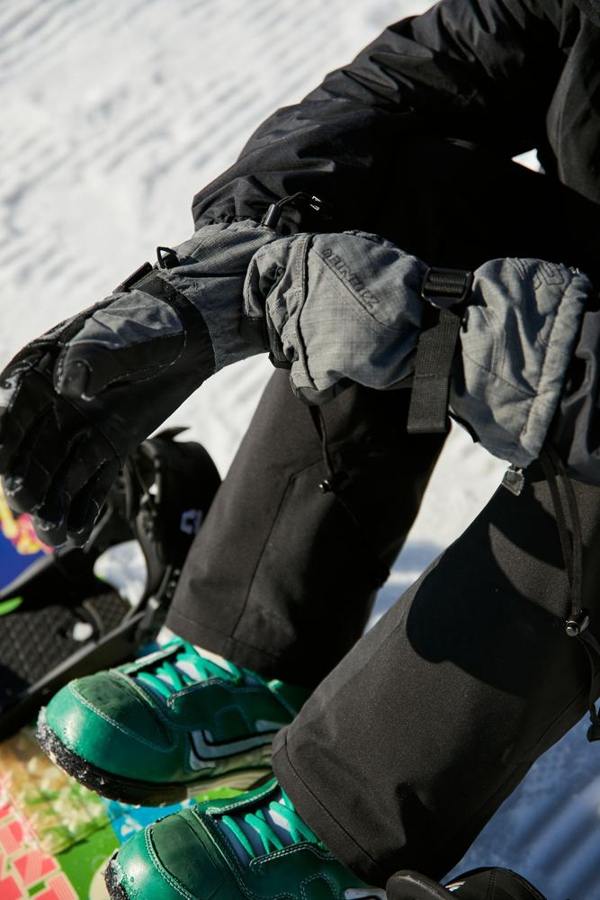
Position the glove cuff over or under the sleeve as intended for the two garments. Check whether bending your arm leaves an open gap or compresses a large amount of fabric. Your own jacket provides a more useful test than an unrelated sleeve in the shop.
Check that you can operate the cuff closure with your other gloved hand. Arrange loose cords or straps according to the model’s instructions. A practical combination should not need its loose ends constantly reorganised.
Put a dry spare somewhere useful
If you bring spare gloves, keep them apart from wet items. Establish whether storage near the lesson is accessible or whether the spare pair will travel in a closed bag. Gloves left in a distant car offer little help during a short lesson break.
Dry used gloves according to the manufacturer’s instructions and check the inside before the next morning. Do not automatically buy a second pair to solve an unresolved fit issue. First, the main pair should suit your hands, jacket and equipment handling.
Assess snowboard gloves as part of your whole equipment combination. Include your jacket and typical hand movements in the fitting, read the specific material and care information and plan where to keep them. That produces a reasoned choice rather than a decision based only on thickness or price.