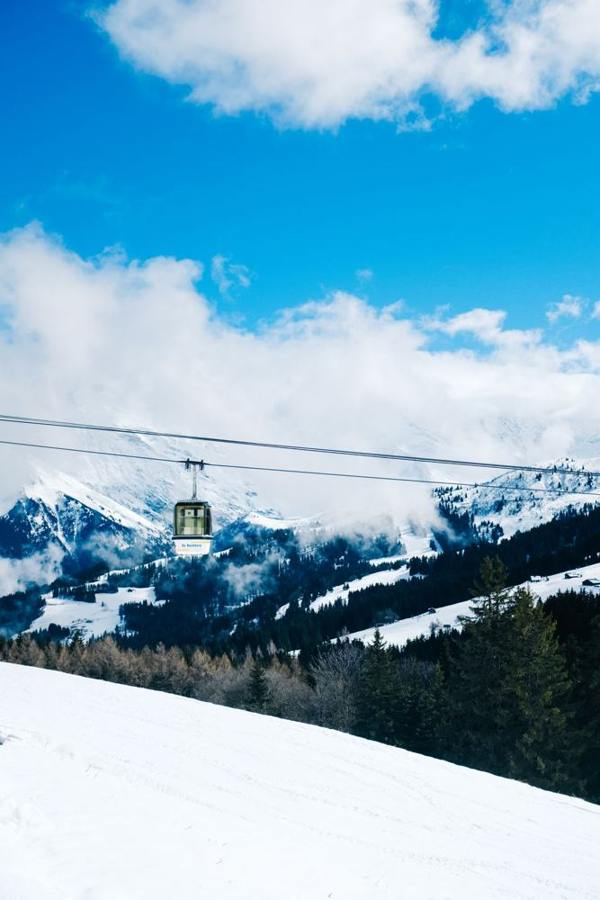
A gondola ride may be part of reaching your snowboard lesson or meeting the group for a later break. First establish which station you actually need. A lift’s name alone is insufficient when it has several sections or intermediate stops. Also ask how snowboards are carried on this installation before joining the boarding queue with your equipment.
Check the destination and ticket together
Ask the school or your companions for the exact station where you should leave. Use the official map to check for intermediate stops or changes along the way. A restaurant with a similar name may be at a different station from the lesson meeting point.
Ask the operator which ticket covers your planned journey, including the return. If you do not intend to ride the board down to the valley, explicitly confirm downhill transport. The connection depends on the installation, operating status and ticket; a gondola shown on a map is not yet a confirmed route home.
Establish where the board belongs
Depending on the installation, there may be particular holders or a position specified by staff. Bayerische Zugspitzbahn’s carriage conditions, for example, refer to designated sports-equipment holders where available. Do not assume other gondolas use an identical arrangement.
For your first use, ask for an explanation of the actual system. Also establish what to do with a board bag or other luggage. Limit loose items so you are not reorganising gloves, phone and equipment simultaneously at the entrance.
Agree on the group’s routine
If several people want to travel together, decide before entering what happens if the group is separated. A clear meeting place beyond the exit area is more useful than trying to squeeze into the same cabin at the last moment.
Follow signs and operating staff’s instructions. Local rules also govern doors and use of the boarding area. Get unresolved questions answered before travelling instead of inferring the procedure from what other passengers do.
On arrival, move to the agreed meeting place rather than using the exit as a waiting area. Look for booking details or the next message once you are there.
Consider the return before the afternoon
Check current operating information and the times of every section you need. The last departure is not a sensible target time for returning to the station building. Include the walk from the lesson or restaurant and potential waiting time.
If operations change, ask for a confirmed alternative. Establish whether people and equipment return by the same route. An improvised snowboard descent does not replace a suitable return plan for someone just starting lessons.
Preparation becomes manageable once you have three answers: the exact station, the designated equipment arrangement and a confirmed return route. Keep them together and ask again on site if the installation or routine differs from expectations. The local explanation remains the deciding guidance.