A day in the snow does not need a ski lesson to count as a holiday day. Building snowmen, discovering tracks or taking short walks can provide plenty of variety. The essentials are a suitable place and a dependable return route. Arrange the day so that going home after a short play session is still a satisfying option.
Choose a designated place
Ask locally which areas are open for playing. An empty patch beside a piste is not automatically a playground. Avoid lift operations, traffic routes and places used by other winter sports participants. Observe local signs and barriers.
Check pedestrian access, the availability of an appropriate break and the journey back. If the area requires a long mountain journey, a simpler valley location may suit you better. Do not plan an improvised shortcut across an active piste.
Choose clothing for contact with snow
Select clothing for sitting, kneeling and frequently touching snow. Consider its fit and intended use. Gloves, boots and trouser cuffs should fit the child rather than merely looking warm. Check before leaving that the child can move comfortably in everything.
Pack dry spare gloves and suitable additional clothing. Keep them separate from wet belongings. Have an arrangement for the return journey if boots or clothes become damp. The appropriate amount of spare kit depends on the location and your opportunities to return.
Collect simple ideas rather than a programme
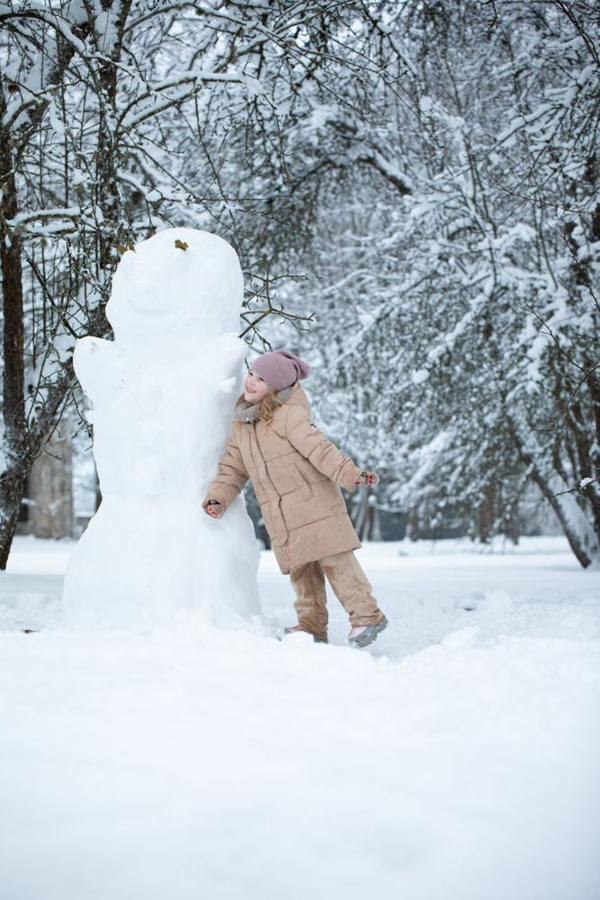
Bring a few ideas: build a small snowman, compare footprints or make shapes with permitted toys. Let the child choose what interests them. Different snow behaves differently when shaped; an unsuccessful snowball does not have to be fixed.
Keep children within the designated play area and adapt activities to the space. Throwing snowballs requires consideration for others and permission where applicable. A quiet outing does not have to become a competition to be worthwhile.
Keep breaks and finishing time flexible
Bring a drink and suitable snack, and establish where eating is allowed. Check during the outing whether clothing is wet and whether the child wants a break. Attention to the actual situation is more useful than one rigid maximum play time.
Finish when clothing, weather or mood suggest returning. Leaving early provides time to dry belongings and enjoy a quieter afternoon. Do not try to compensate for an elaborate journey by staying as long as possible.
A good snow-play day stays simple: an approved place, appropriate clothing, an accessible break and a clear return route. Children do not need to learn a skill or finish a large construction. Discovering things together is a sufficient aim.