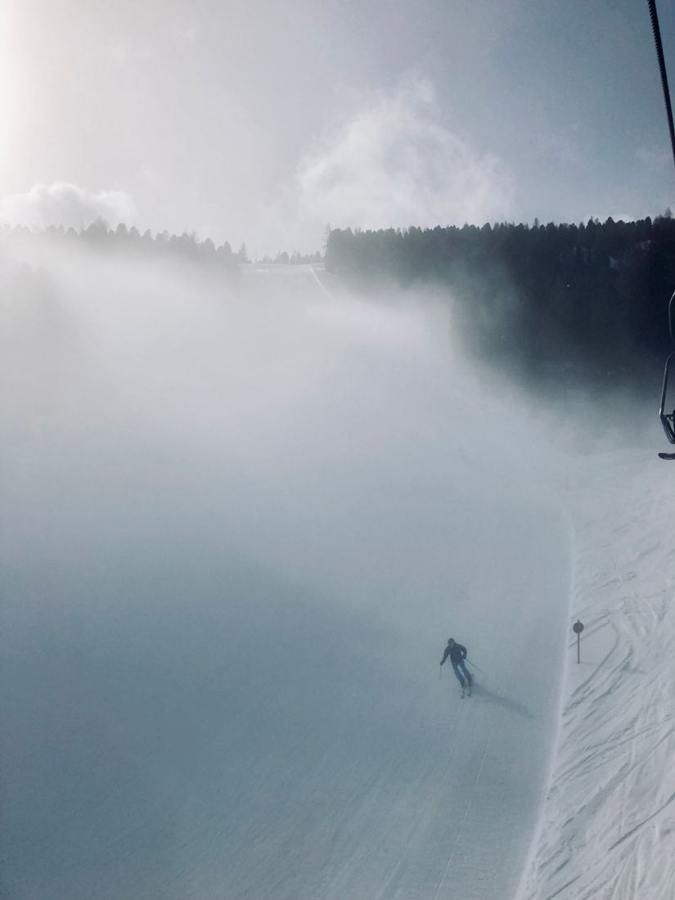
When visibility worsens, the previous evening’s plan may no longer fit. A saved map or earlier visit does not establish today’s situation. Beginners should therefore discuss the plan again before starting another connection. The aim is not to complete the largest possible circuit, but to make a decision appropriate to what is actually happening.
Clarify conditions before the first connection
Use current operator information about open lifts, pistes and changes. Do not rely only on a general weather number for the village. Ask the ski school how lessons are organised under the actual conditions and whether the meeting point remains the same. A notice about one installation does not describe an entire route. If your planned connection contains several sections, consider them together, including the intended return journey.
Match the decision to your current stage
Tell the instructor what you can see and what makes you uncertain. The FIS rules require adaptation to ability, terrain, snow, weather and traffic. That does not create a universal technique everyone can adopt from a brief description. Ask for an appropriate local plan. Do not follow experienced companions automatically when their route choice depends on skills or experience you do not yet have. Your own situation needs a place in the decision.
Do not tie the afternoon to old reservations
Check whether a meal or meeting can change if reaching it would require an unsuitable connection. A valley restaurant or later shared appointment may remove pressure. Inform companions in other areas early and identify the new place clearly.
A pause or earlier finish is not an organisational failure. If you plan another activity, check its current permitted use too; a snowy route is not automatically an appropriate walking path. Make the alternative practical rather than merely replacing one unverified connection with another.
Reassess changes during the day
A brief improvement in light does not establish that every previous difficulty has gone. Observe local notices and ask again when the plan changes. Do not add another uphill journey simply because the pass includes it. Clarify the return and remaining operating times before travelling farther away. Afterwards, note which information was missing so your next poor-visibility plan becomes more useful than a general intention to be flexible.
An adapted ski day is well planned when current information and your stage fit together. Discuss conditions, simplify connections and keep shared meetings adjustable. The original route does not have to be completed; it was a proposal for circumstances that may since have changed.