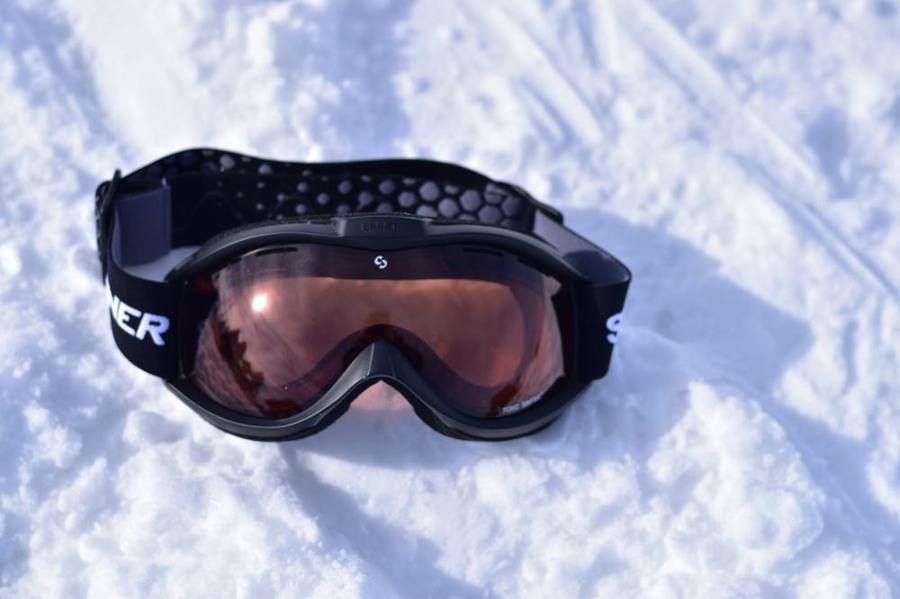
After a day on snow, goggles may have fingerprints outside and moisture inside. Wiping both surfaces with your sleeve is not an appropriate routine. First consult the care instructions and distinguish the inner surface, exterior, frame and padding. For rented goggles, the shop can explain the intended treatment. Keep suitable clean accessories available rather than reaching for any cloth you happen to find.
Give moisture time to dissipate
Oakley’s care guidance explicitly warns against rubbing a wet inner lens. For its goggles, the manufacturer describes gently blotting remaining moisture with the supplied bag and allowing drying time. Check your own goggles’ instructions rather than transferring those steps unquestioningly to every model.
If marks inside remain unclear, initially avoid further cleaning attempts. Ask the manufacturer or specialist shop what treatment is permitted there. An apparently stubborn mark does not justify firmer pressure or an arbitrary cleaning product.
Keep appropriate accessories clean
Store the manufacturer’s intended cloth or bag separately from dirt and damp equipment. A bag left loose beside outdoor shoes is not automatically ready for cleaning again. Follow its own washing and drying instructions.
Oakley identifies paper products, ski gloves and other abrasive materials as unsuitable for cleaning goggles. Do not make a tissue or glove your standard solution. The instructions for your specific lens determine what may be used on its exterior.
Choose a protected drying location
Put goggles somewhere nobody will step on them and luggage cannot press against the lens. Keep them from disappearing between damp textiles. The frame and face padding should also be able to dry according to the instructions.
A dashboard or intense heat source is not a suitable shortcut. Oakley explicitly warns against concentrated heat and sunlight. Before removing a lens for care, establish whether and how the model is intended to allow it; change mechanisms differ between goggles.
Pack only after drying
Check both the goggles and bag before packing. Use the intended protective bag or suitable case without adding hard objects. Spare lenses need their own orderly storage.
Have scratches, loose components or persistent vision problems professionally assessed. Do not try to polish the inner surface or renew a coating yourself. Note the model and affected area so your enquiry at the shop is specific.
Good goggle care is restrained and model-specific. Allow moisture to dissipate as instructed, keep the intended accessories clean and wait until drying is complete before packing. Unexplained marks call for a focused conversation with a specialist rather than a sequence of increasingly forceful wiping attempts.