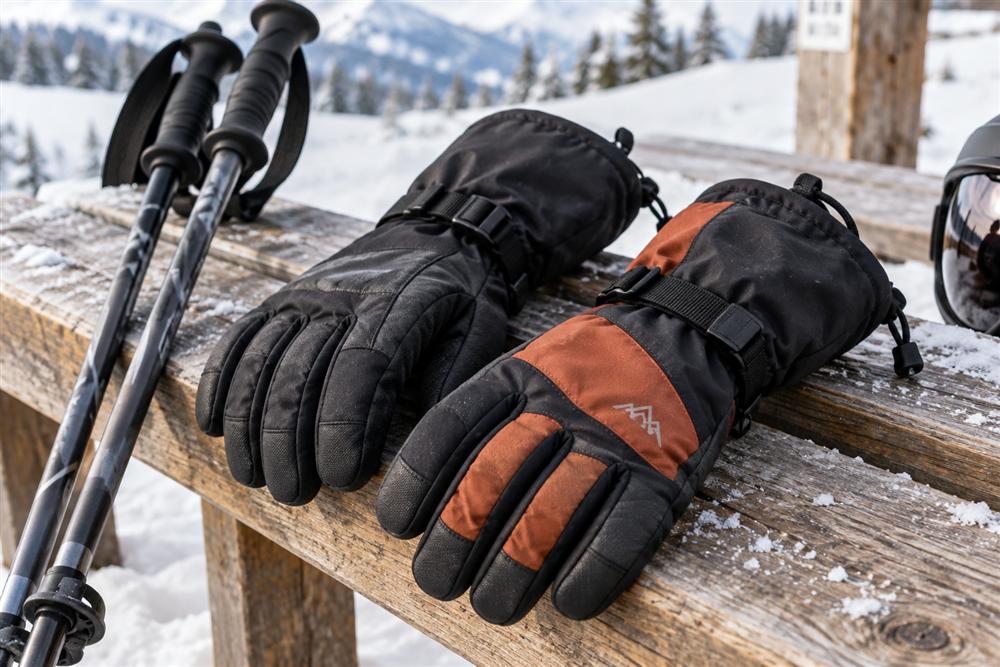
Ski gloves should feel suitable in cold conditions while allowing the day’s practical movements. These include holding a pole, using a zip, and organising small pieces of equipment. Thickness alone cannot tell you how well that will work. Start with fit and try a few representative actions before assessing extra features or an especially elaborate description of the materials.
Check the size on the actual pair
Use the brand’s measuring instructions as a starting point. Hestra provides its own sizing method, but the number does not replace trying the particular model. Put on both gloves and assess whether fingers, thumbs, and palms have comfortable space. Uncomfortable pulling when closing your hand is not a convincing fit.
Excess material beyond the fingertips can make small tasks awkward. Insufficient room is not a good answer either. Compare different cuts rather than only the next size in the same shape. If you intend to use liner gloves, include them in the fitting.
Try them with a pole and jacket
Hold a suitable pole as you would when skiing without squeezing excessively hard. Then try the jacket zip and its important adjusters. A control that requires removing a glove is not automatically unacceptable, but that limitation should fit the way you intend to spend the day.
Compare the cuff with your jacket sleeve. Decide whether its intended construction is worn over or beneath the sleeve. Look for a combination that does not repeatedly pull apart when your arms extend. Long cuffs are useful only if you can close and reopen them comfortably with your jacket.
Choose for the day rather than a temperature number
Consider expected conditions, waiting periods, and your own perception of warmth. A manufacturer’s warmth description offers guidance for that product, not a promise for every wearer. Check its stated materials and intended use without turning a product name into a universal temperature guarantee.
Also consider how damp gloves will dry afterwards. Removable liners can change the handling, but still need suitable care. Read the drying and cleaning guidance; placing gloves directly beside a hot source is not automatically permitted. A dry spare pair may suit your routine better than continually increasing the thickness of the main pair.
Choose gloves that allow the important movements and whose construction suits your conditions. After the first ski days, note specific difficulties rather than simply warm or cold. Those observations support a targeted addition later instead of responding to every dissatisfaction by buying a still thicker model.