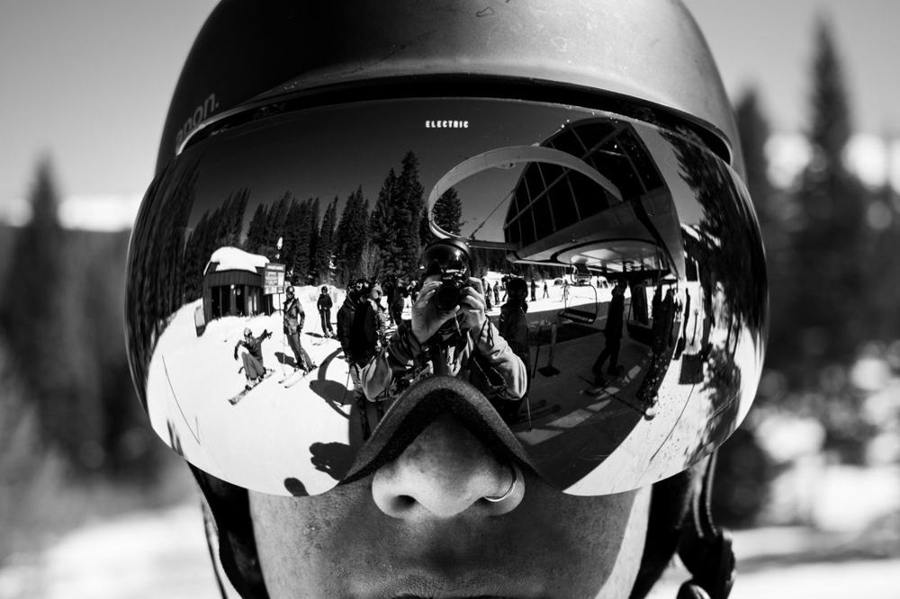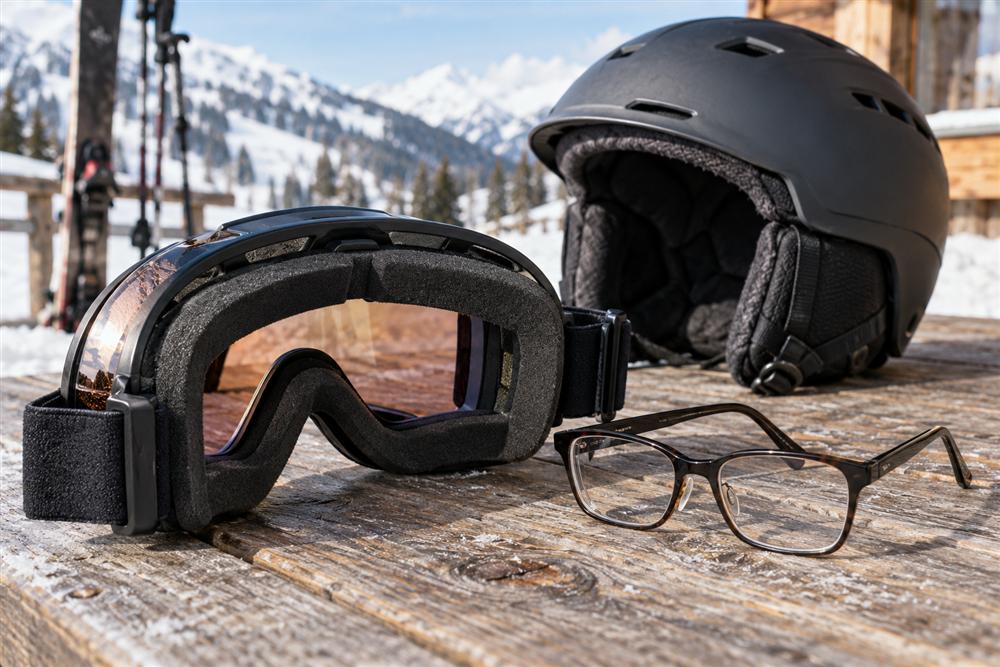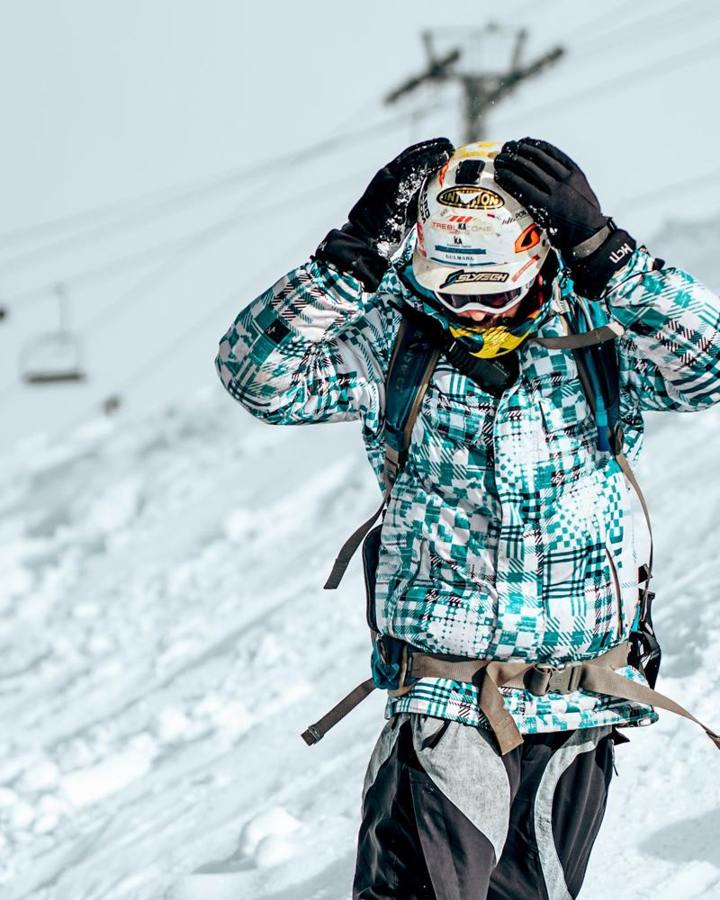
Goggles can feel comfortable on their own, then press on your nose when worn with your helmet. Equally, a well-fitting helmet can clash with a tall goggle frame. Both belong in the same fitting session. Bring the helmet you will actually wear and your prescription glasses if needed. A photograph of the combination cannot replace the comparison: head and face shape affect how the pieces fit you.
Adjust the helmet first
Put on the helmet and adjust it according to its instructions before adding the goggles. Do not change its intended position simply to accommodate a particular frame. If you cannot judge whether the helmet fits correctly, have its adjustment checked at a specialist shop.
Also bring any thin head covering you plan to wear underneath, provided the helmet manufacturer permits that use. Trying the helmet without it otherwise describes a different combination from your eventual ski day. Compare several frame shapes using the same helmet adjustment where possible.
Judge facial contact before frame size
Position the goggles and adjust their strap as instructed. Notice whether the padding contacts your face evenly and whether there is uncomfortable pressure around the nose or cheeks. More strap tension is not a dependable answer to an unsuitable frame shape. Try another size or shape if a workable fit requires excessive tightening.
Look forwards and to either side. A large frame helps only when it actually lets you see comfortably and suits your face. Wear each candidate for a few minutes rather than removing it immediately. This gives you a better opportunity to notice irritating contact points.
Inspect the meeting point above the frame
Look at the helmet-and-goggle interface from the front and side. Smith describes a closed interface for its combinations without the helmet pushing down on the goggles. Check both possibilities: is there an obvious exposed strip across the forehead, or does the helmet force the frame downwards?
Check the intended ventilation openings too. Giro explains that matched helmet and goggle vents form part of the airflow arrangement. Do not cover them with improvised padding. Manufacturer guidance about pairing equipment is a useful starting point, but it does not replace trying the combination on your own face.
Compare during ordinary movement
Turn your head, look down, and move your jaw as you would when speaking. Check whether the goggles or strap shift and whether you keep wanting to readjust them. With prescription glasses, also assess the space for their frame and arms. An OTG label indicates intended use over glasses; your particular pair still needs to fit inside.
Record the exact helmet and goggle model names for the suitable pairing. If several options feel comfortable, compare lenses, replacement options, and price next. If pressure or an awkward interface remains, try another shape with specialist assistance rather than shifting the helmet’s fit to accommodate the goggles.