Comfortable footwear is welcome after a ski day. However, a soft boot for short walks through a hotel is not automatically suitable for a longer outing. Before buying, consider which journeys you will actually make during the holiday. This concerns everyday routes around the village; more demanding terrain or particular winter activities require separate planning and footwear suited to that undertaking.
Describe the routes from your accommodation
Note whether you mainly walk from the car park into the building or head to a bus stop every day. Include stairs, the route to the supermarket and the walk home after a restaurant meal. Ask your accommodation about its entrances. A short distance measured on a map says little about the actual walking route.
Compare the product description with that use. Look at the intended application and information about the upper, lining and care. Words such as winter or outdoor do not explain either the fit on your feet or performance on every surface. Seek concrete details rather than the most substantial looking design.
Try them with the intended socks
Wear the socks you plan to use with these boots during the fitting. Fasten the laces or zip fully and walk for several minutes. Your heel should not move noticeably up and down with every step. Also check that you can stand comfortably around the forefoot and move your toes.
Sit down and take the boots off again. A fastening that requires considerable force may become awkward when you are carrying luggage in the morning. Try both boots on both feet. If you are unsure between sizes, ask the shop to assess the fit instead of simply choosing a longer size.
Assess the sole and weather realistically
Look at the tread, condition and intended operating conditions of the sole. Deep tread does not guarantee that you cannot slip on ice. Continue planning your journeys around the actual local conditions. If a section is icy or closed, another route makes more sense than relying on a product promise.
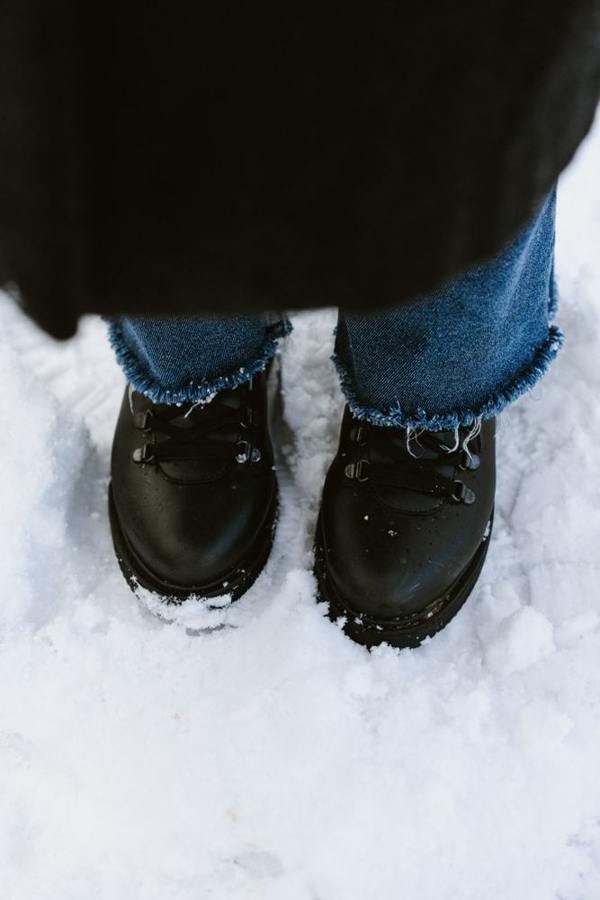
Check the care required by the upper and whether the manufacturer gives specific information about moisture. A high shaft alone does not prove waterproofness. Your trouser length should work too: a hem caught beneath the shoe or dragging on the ground makes everyday use awkward.
Consider luggage space
Winter boots occupy a noticeable amount of space. Consider whether one pair can cover the planned everyday journeys rather than taking several similar designs. Lightweight indoor footwear can be added if needed at your accommodation. Separate used boots from clean clothing on the return journey, then let them dry according to their care instructions.
The right choice starts with the journeys you genuinely intend to make. A thorough fitting, clear product information and a sensible assessment of local conditions belong together. One boot does not need to cover every conceivable winter activity. It should be comfortable for your actual daily use and straightforward to care for afterwards.