A ski boot bag can bring boots, helmet and clothing together in one piece of luggage. Whether that is practical depends on its layout. Different manufacturers may mean different constructions by wet compartment. Compare the actual specifications and look inside the bag. Above all, check whether your own boots fit and how you can empty and dry the bag again after travelling.
Examine the separation closely
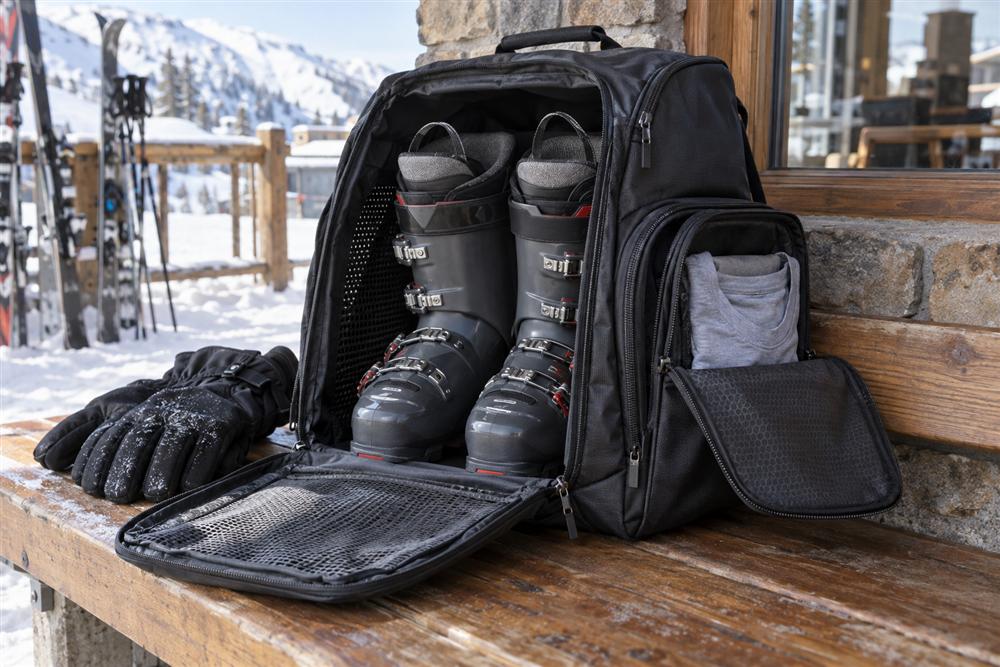
Look for independent access to the boot compartment and a continuous division from the remaining luggage. A removable insert works differently from a permanently sewn partition. Read whether the manufacturer describes the compartment as waterproof or simply as a separate storage area. Do not assume additional properties from the phrase wet compartment alone.
Look at corners and joins where small objects might disappear. Useful separation lets you remove the boots without completely opening the clean clothing compartment. For the return journey, it also helps to have somewhere for used socks inside their own pouch.
Load it with the actual boots
The total capacity in litres tells you little about the boot compartment's shape. If possible, bring your own ski boots to the fitting. Check that both fit without heavy pushing and that the zips close without tension. Consider protruding buckles and the packing orientation specified by the manufacturer.
Then fill the remaining compartments with the things you actually intend to carry. A bag can accommodate your boots yet leave no practical space for your helmet. Avoid compressing the helmet between hard objects. Follow its storage instructions and consider whether a protective compartment or separate bag would work better.
Rehearse carrying the full bag
Carry the loaded bag a few steps. Switch between the handle and any shoulder straps intended for carrying. Check whether the contents slide down and whether the weight pulls to one side. A padded strap offers limited help if the whole bag keeps twisting around.
Put it on the ground and open the boot compartment. Can you remove the boots without spreading out the rest of the bag's exterior? In a small changing area, the opening direction may matter more than an extra external pocket. Measure the available space in your vehicle or accommodation cupboard if necessary.
Deal with moisture after travelling
A separate compartment is not a permanent drying space. Remove damp equipment after transport and care for the boots and bag according to their respective instructions. Check whether an insert can be cleaned or taken out. Allow closures and internal surfaces to dry appropriately before storing the bag in a cupboard for longer periods.
Compare boot bags with their complete intended contents and a short carrying trial. The best layout clearly organises your boots, clean belongings and subsequent care. Clear manufacturer information about separation is more useful than a large capacity alone. Also consider at purchase where you can open the bag after a wet day.