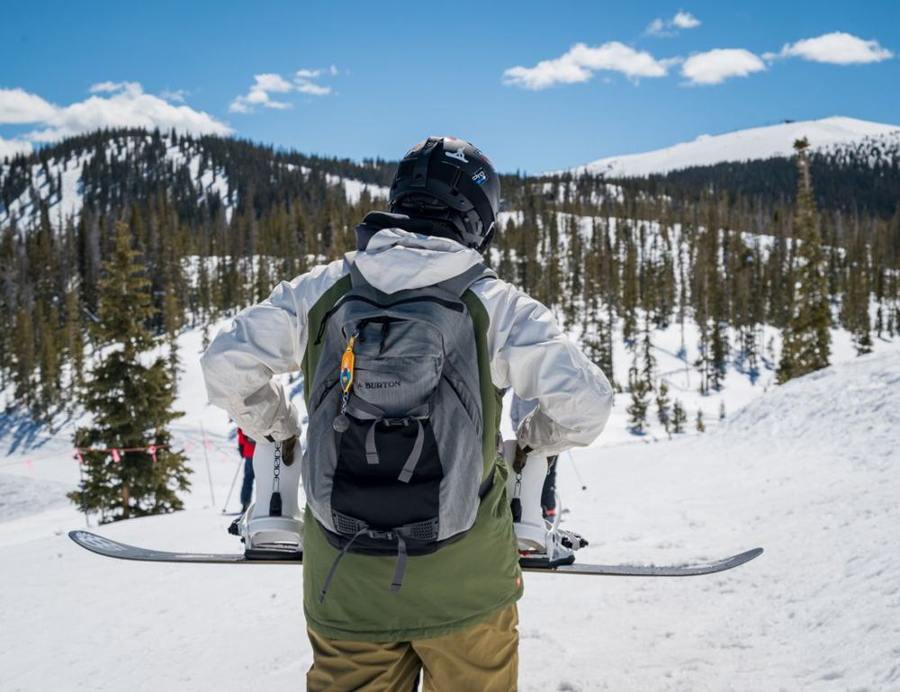
Start packing by asking what you will actually need between leaving your accommodation and returning as planned. A day on open pistes may call for a different list from other mountain activities. This backpack does not replace specialised equipment or training for touring. Define the intended use clearly so that a small day bag does not become a disorganised store for your entire holiday.
Choose the contents on a table
First set out a drink, a small snack, a dry additional layer and the personal items you genuinely want to carry. Check what is already stored securely in jacket pockets. A second wallet or several bulky packages take up space without making the day easier. Keep any necessary personal medication organised according to your individual instructions.
Consider when you would use each item. A light layer for a break belongs somewhere accessible; paperwork for the journey home can usually remain at your accommodation. For very short outings, a secure jacket pocket may be sufficient. Let the selected contents determine the backpack size you need.
Keep the load settled
Arrange the contents so that hard objects cannot knock together loosely or press against your back. Secure the drink bottle and check its closure. A separate pouch keeps dry clothing apart from the other contents, although it does not turn the entire backpack into a waterproof construction.
Put small items in an identifiable internal compartment. A light coloured pouch is easier to find in a dark main compartment than several loose black objects. Load the backpack fully for a trial and wear it over your ski jacket. Adjust it using the instructions for that particular model.
Practise access while stationary
At home, find the bottle and additional layer without emptying everything. If you have to put gloves, keys and phone on a bench each time, change the arrangement. Open compartments outdoors only when stationary in a suitable place. Keep paths, boarding areas and other guests clear while doing so.
Gather or stow unused strap ends as intended. Dangling shoes and long loops make a small backpack awkward. Avoid filling it with objects that can only be attached outside and were never intended for this use in the first place.
Get organised before the lift
Follow the individual lift operator's notices and staff instructions for handling backpacks. Ask about anything unclear before boarding. Fastenings, straps and loose items should already be organised before your turn arrives. The lift is not a suitable moment to start searching deep inside the main compartment for something.
A well packed small backpack is easy to explain: every item has a purpose and a fixed place. Check the bottle closure, zips and strap ends before leaving. After the day, unused items and awkward access show what you can deliberately leave behind or arrange differently next time.