A ski day combines active descents, waiting, and breaks in different surroundings. The base layer next to your skin needs to suit both your other clothing and that routine. A material claim alone cannot settle the choice. Start with what you already wear, which outer layers are available, and when you could realistically adjust or change clothing during the day.
Check the combination rather than one item
Patagonia describes a system comprising a base layer, midlayer, and protective outer layer. Use this to organise existing clothing, not as an obligation to buy three new pieces. An insulated jacket changes the need for additional layers compared with an uninsulated shell.
Try the combination together. Raise your arms, bend, and sit down. Notice shifting hems, irritating seams, or a tight neck opening. The base layer should fit as intended without requiring you to rearrange it after every movement.
Compare the actual material and care
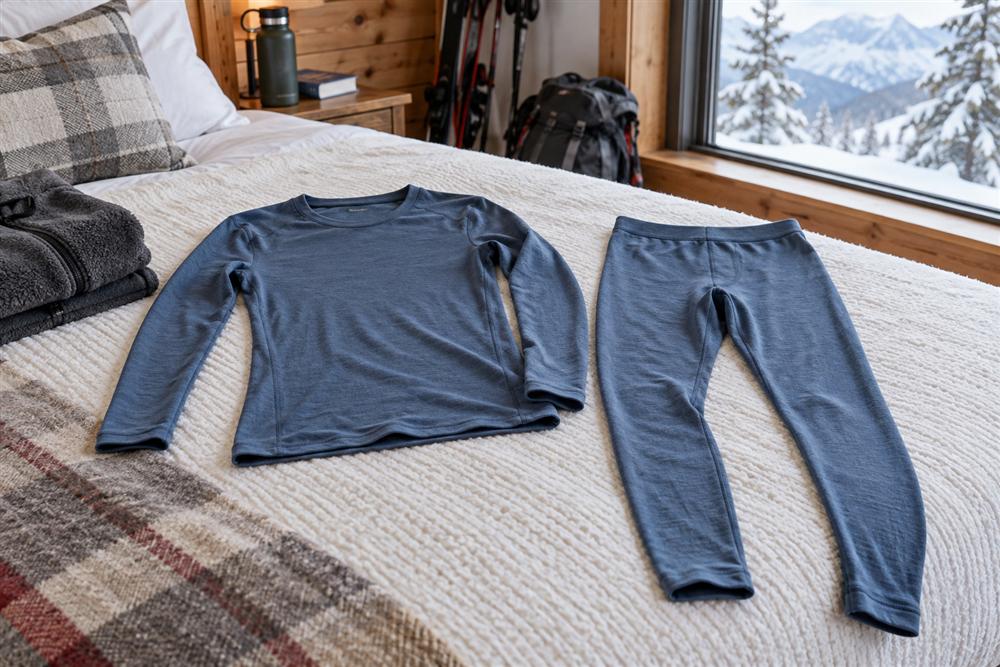
Read the composition, intended use, and care label for the particular garment. Wool blends and synthetic materials can have different constructions; the material name alone describes neither thickness nor cut. Check whether it feels comfortable and whether you can wash and dry it as required during the trip.
Compare actual garments rather than broad claims about a supposedly best material. A single rigid temperature threshold does not reliably describe suitability for every person and weather situation. Your previous observations can help if you also consider the jacket and pattern of activity involved at the time.
Think through adjustments before setting out
Consider which layer is easy to open or remove while out. Changing a base layer requires more time and privacy than opening jacket ventilation. Plan accessible adjustments to outer clothing before beginning with a very thick first layer.
A dry spare top may be useful during a long day, but it needs a defined place in the routine. It helps little if it is inaccessible in another group member’s car. Arrange access to accommodation or luggage, and keep damp garments separate from dry ones afterwards. Note which particular part of the day left you feeling too warm or too cool.
Start with a manageable combination whose parts you have tried together. Adjust it around specific parts of the day instead of simply adding as many layers as possible. Good planning makes changes accessible and keeps dry replacements available without turning every weather change into a complete change of clothes.