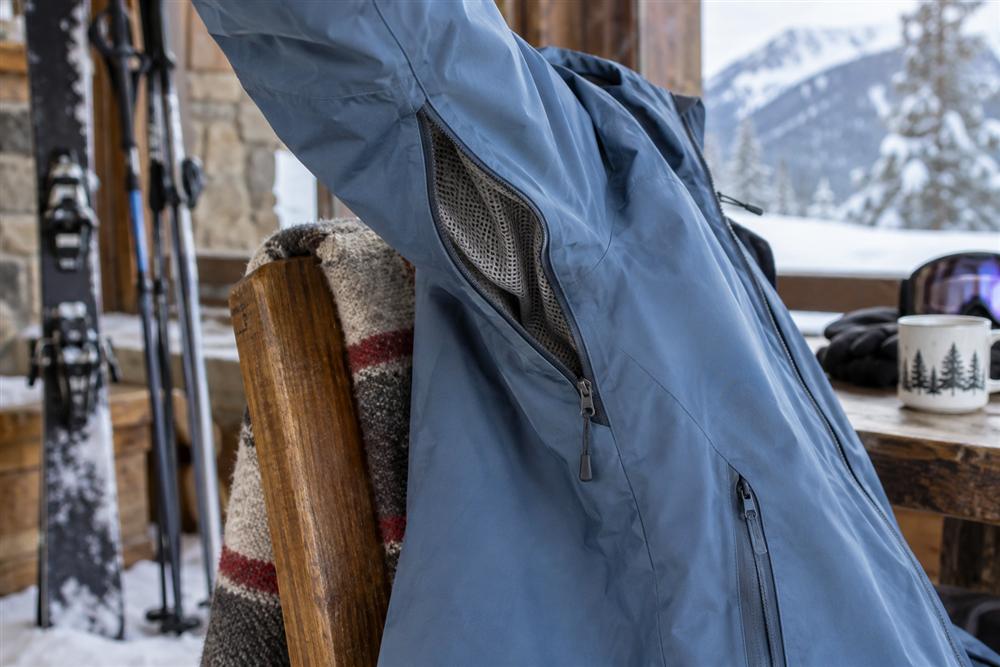
Vents are easy to neglect when their zips sit under the arms and are difficult to find with gloves. Their operation belongs in the practical assessment of a ski jacket. Try them before the first day and distinguish them from pockets. Plan adjustments somewhere calm rather than reaching for an unfamiliar fastening while moving down the piste.
Inspect the actual construction
Read your jacket’s description and instructions. Check vent locations, how far they are intended to open, and whether mesh or another covering sits inside. Models differ. An opening that looks similar from outside may be a pocket rather than ventilation.
Move both sliders if provided and learn their endpoints. Notice which clothing becomes exposed underneath and whether a lining obstructs movement. Do not force a sticking zip; first check for trapped fabric or covering and follow the intended care guidance.
Practise with the complete clothing arrangement
Wear the jacket over your planned layers and operate the vents with gloves. Check whether you can reach them without awkwardly twisting your shoulders. An accessible opening is less useful if other equipment covers it in actual use.
If a backpack is part of the setup, inspect its strap positions. Check the closed position too so you know when the fastening is completely shut. Spend time on this sequence while trying the jacket; it describes later use better than simply counting zips.
Include adjustments in the day’s routine
Notice when your existing clothing regularly feels too warm. Adjust openings at a suitable stopping point before concentrating on the next run. Weather, wind, and precipitation belong in the decision. An open jacket or vent is not the appropriate setting for every condition.
Compare the effect with the other layers. Ventilation does not automatically resolve an unsuitable overall clothing combination. If you continually make substantial adjustments, review the thickness and construction underneath for the following day. Note the particular period, such as active skiing or a long break, instead of summarising the weather alone.
Check after use
Inspect fastenings and coverings for dirt or trapped fabric while drying the jacket. Treat them according to its label and manufacturer instructions. Check the intended vent position again before the next departure: a vent left open for airing is not automatically the correct starting arrangement for the morning.
Usable ventilation depends largely on accessibility and deliberate operation. Know your jacket and adjust it calmly for the next part of the day. An overlooked zip can then become a function you actually use, while the rest of your layers and the weather remain part of the decision.